français



Marteau perforateur ou perceuse à percussion : quelles différences et lequel choisir ?
je
.
Introduction
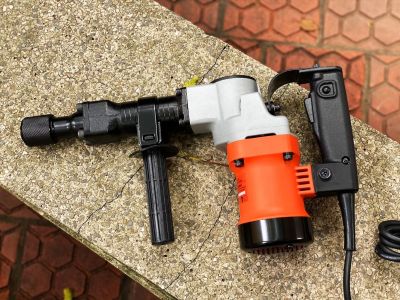
Pour les travaux de perçage et de burinage intensifs, le choix de l'outil adéquat a un impact considérable sur l'efficacité et le résultat. Le marteau perforateur et la perceuse à percussion sont deux outils souvent comparés. Bien qu'ils puissent paraître similaires, leurs mécanismes de fonctionnement et leurs applications sont très différents.
Dans cet article, nous allons détailler les principales différences, applications et avantages de chaque outil afin de vous aider à faire le bon choix pour votre entreprise ou vos projets.
II
.
Qu'est-ce qu'un
Marteau rotatif
?
Un marteau perforateur est un outil puissant conçu pour les travaux intensifs tels que le perçage du béton, de la pierre et de la maçonnerie. Il utilise un mécanisme de percussion pneumatique qui délivre une énergie d'impact plus forte et plus constante que les perceuses à percussion classiques.
(1) Caractéristiques principales :
Énergie d'impact élevée pour les matériaux résistants
Convient pour percer de grands trous
Peut être utilisé pour le burinage et la démolition
Système de mandrin SDS Plus ou SDS Max
(2) Applications courantes :
Forage du béton
Enlever les carreaux ou le plâtre
Travaux de démolition légère
utilisation dans le secteur de la construction et de l'industrie
Qu'est-ce qu'un
Perceuse à percussion
?
Une perceuse à percussion est plus adaptée aux travaux légers. Elle combine la rotation à un mouvement de frappe rapide, mais la force d'impact est bien moindre que celle d'un marteau perforateur.
(1) Caractéristiques principales :
action de martelage mécanique
Léger et plus compact
Idéal pour les petits trous et une utilisation occasionnelle
(2) Applications courantes :
Percer dans de la brique ou du béton léger
projets de bricolage
Installation des appareils
III
.
Marteau perforateur vs perceuse à percussion : principales différences
(1) Mécanisme d'impact
Les marteaux perforateurs utilisent un système pneumatique, ce qui leur permet de frapper plus fort. Les perceuses à percussion, quant à elles, fonctionnent grâce à des engrenages mécaniques et produisent donc un impact moindre.
(2) Performance
Les marteaux rotatifs sont nettement plus efficaces pour les travaux intensifs et le fonctionnement continu.
(3) Polyvalence
Les marteaux perforateurs peuvent alterner entre les modes perçage et burinage, ce qui les rend plus polyvalents pour les travaux de construction.
(4) Confort de l'utilisateur
Les marteaux rotatifs offrent généralement un meilleur contrôle des vibrations, réduisant ainsi la fatigue de l'opérateur lors d'une utilisation prolongée.
IV
.
Quand faut-il choisir un marteau perforateur ?
Vous devriez choisir un marteau perforateur si :
(1) Vous travaillez fréquemment avec du béton armé
(2) Vous devez percer des trous de grand diamètre
(3) Vous avez besoin de fonctions de burinage ou de démolition
(4) Vous êtes un entrepreneur ou un distributeur professionnel
Pour les importateurs et les grossistes, les marteaux perforateurs sont souvent très demandés sur les marchés de la construction, ce qui en fait un produit phare pour l'expansion.
V
.
Pourquoi les marteaux perforateurs sont essentiels pour les professionnels
Dans les projets de construction et de rénovation modernes, l'efficacité et la durabilité sont essentielles. Les marteaux perforateurs permettent non seulement d'accélérer le travail, mais aussi de réduire sa pénibilité, ce qui en fait un outil indispensable pour les professionnels.
Pour les distributeurs, proposer une gamme fiable de marteaux perforateurs peut contribuer à conquérir une plus grande part de marché et à répondre aux divers besoins des clients.
VI
.
Conclusion
Bien que les marteaux perforateurs et les perceuses à percussion aient tous deux leur utilité, les marteaux perforateurs se distinguent par leur robustesse et leur usage professionnel. Comprendre leurs différences vous permettra de choisir l'outil adapté et d'améliorer votre productivité.
Si vous souhaitez élargir votre gamme de produits ou vous procurer des marteaux rotatifs de haute qualité, privilégier la performance, la durabilité et le confort d'utilisation vous donnera un avantage concurrentiel sur le marché.
Pourquoi choisir les outils électriques KYNKO ?
Dans le domaine de l'outillage électroportatif professionnel et industriel, KYNKO est une référence d'excellence. Nos outils, conçus avec une ingénierie de précision, allient durabilité, fiabilité et innovation. Adaptés aux professionnels et aux industries, les outils électroportatifs KYNKO offrent des performances et une efficacité inégalées, garantissant une exécution précise et irréprochable de chaque tâche.
Donnez une nouvelle dimension à votre travail grâce aux outils électriques KYNKO — la quintessence de la qualité, de la fiabilité et de la performance dans le monde des outils professionnels et industriels.
Catégories
dernier blog
Mots clés
 Tel :+86 592 2068518
 Email: info@kynko.com.cn
 Whatsapp : +8618650800148
 Jinhehang Development Zone, Shanxia, Hui'an, Quanzhou, Fujian, China
Pour toute demande de renseignements sur nos produits ou notre liste de prix, veuillez nous contacter et nous vous contacterons dans les 24 heures.



© Copyright: 2003-2026 KYNKO INDUSTRIAL LIMITED Tous les droits sont réservés.
IPv6 network supported

Talk by Wechat