français



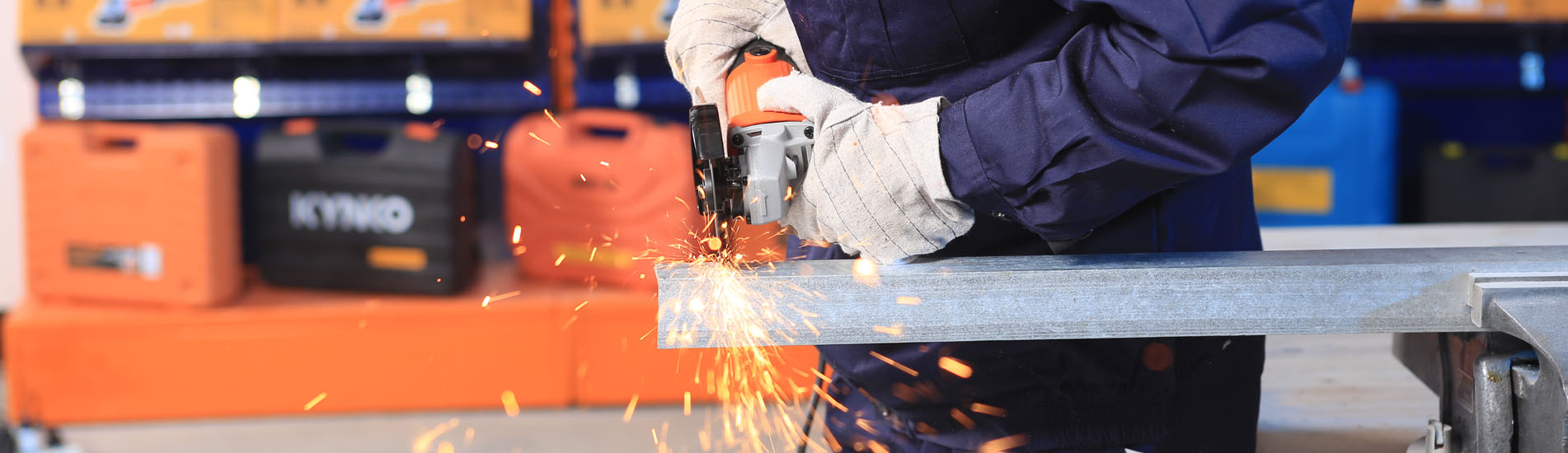
Meuleuse d’angle vs outil de coupe : quelle est la différence ?
Lors du choix du bon outil électrique pour couper et meuler, deux options courantes sont la meuleuse d'angle et l'outil de coupe. Bien qu'ils puissent sembler similaires et que tous deux puissent être utilisés pour la coupe, ils sont conçus pour des applications différentes.
Comprendre la différence entre une meuleuse d'angle et un outil de coupe peut vous aider à choisir le bon outil pour votre travail, à améliorer votre efficacité et à obtenir de meilleurs résultats.
1. Qu'est-ce qu'une meuleuse d'angle ?
Une meuleuse d'angle est un outil électrique polyvalent conçu pour le meulage, la coupe, le polissage et la préparation des surfaces. Elle utilise généralement un disque monté à un angle de 90 degrés par rapport au moteur.
Selon le type de disque installé, une meuleuse d'angle peut travailler avec des matériaux tels que le métal, la pierre, le béton et la maçonnerie.
Les applications courantes comprennent :
•Couper des tuyaux et des barres métalliques
•Meuler des soudures et des surfaces métalliques
•Couper de la pierre, du carrelage et du béton
•Enlever la rouille et la peinture
•Polir et préparer les surfaces
L'un des plus grands avantages d'une meuleuse d'angle est sa polyvalence. En changeant de disque, un seul outil peut effectuer plusieurs tâches différentes.
2. Qu'est-ce qu'un outil de coupe ?
Un outil de coupe, également appelé meuleuse de coupe, est principalement conçu pour effectuer des coupes rapides et précises. Son objectif principal est de couper des matériaux plutôt que de les meuler ou de les polir.
Les outils de coupe sont couramment utilisés pour couper :
•Des tôles et des tuyaux métalliques
•Des boulons et des tiges
•Des profilés en acier
•Du carrelage et de la maçonnerie
•D'autres matériaux fins ou relativement petits
Comparé à une meuleuse d'angle, un outil de coupe possède généralement une conception plus spécialisée. Il est particulièrement utile lorsque la tâche principale consiste à effectuer des coupes droites rapides.
3. Meuleuse d'angle contre outil de coupe : principales différences
La principale différence réside entre la polyvalence et la spécialisation.
Une meuleuse d'angle convient à un large éventail d'applications, tandis qu'un outil de coupe est principalement optimisé pour la coupe.
Conception
Les meuleuses d'angle disposent généralement d'une poignée latérale et d'un carter de protection conçus pour différentes applications de meulage et de coupe. Les modèles plus grands peuvent également être équipés de moteurs plus puissants pour les travaux intensifs.
Les outils de coupe sont généralement conçus autour des performances de coupe, avec le disque et le carter positionnés spécifiquement pour les opérations de coupe.
Applications
Une meuleuse d'angle peut effectuer plusieurs tâches, notamment la coupe, le meulage, le ponçage et le polissage.
Un outil de coupe est principalement destiné à couper efficacement les matériaux.
Type de disque
Les meuleuses d'angle peuvent utiliser différents accessoires, tels que des meules abrasives, des disques de coupe, des disques à lamelles, des brosses métalliques et des tampons de polissage, selon le modèle et l'application.
Les outils de coupe utilisent généralement des disques de coupe fins spécialement conçus pour un enlèvement rapide de matériau par découpe.
Polyvalence
Si vous avez besoin d'un seul outil pour plusieurs travaux, une meuleuse d'angle est généralement le meilleur choix.
Si votre travail consiste principalement en des découpes répétitives, un outil de coupe dédié peut être plus pratique.
4. Quel outil devriez-vous choisir ?
Le bon choix dépend de votre application.
Choisissez une meuleuse d'angle si :
•Vous devez couper, meuler et polir avec un seul outil.
•Vous travaillez avec différents matériaux.
•Vous avez besoin d'un outil polyvalent pour la construction ou le travail des métaux.
•Vous changez fréquemment entre différentes applications.
•Vous avez besoin d'un outil robuste pour des travaux exigeants.
Choisissez un outil de coupe si :
•La découpe est votre application principale.
•Vous effectuez principalement des coupes droites.
•Vous souhaitez un outil dédié à la découpe rapide.
•Vous coupez fréquemment des tuyaux métalliques, des tiges, des feuilles ou des matériaux similaires.
Pour les entrepreneurs professionnels et les ateliers, une meuleuse d'angle peut souvent offrir une plus grande flexibilité, car la même machine peut gérer plusieurs applications en changeant les accessoires.
5. Conseils de sécurité pour les deux outils
Les meuleuses d'angle et les outils de coupe fonctionnent tous deux à des vitesses élevées, il est donc essentiel d'adopter des pratiques de sécurité appropriées.
Utilisez toujours le disque adapté au matériau et à l'application. Vérifiez que le disque n'est pas endommagé avant utilisation et assurez-vous qu'il est correctement installé.
Portez un équipement de protection individuelle approprié, notamment des lunettes de sécurité, une protection auditive, des gants et des vêtements de travail adaptés. Assurez-vous que le carter de l'outil est correctement installé et ne retirez jamais le carter pendant l'utilisation.
Lors de la découpe, évitez d'exercer une pression excessive et laissez le disque effectuer le travail. Suivez toujours les instructions du fabricant et utilisez des accessoires compatibles avec les spécifications de l'outil.
Conclusion
La différence entre une meuleuse d'angle et un outil de coupe réside principalement dans leurs applications prévues. Une meuleuse d'angle est un outil électrique très polyvalent qui peut couper, meuler, polir et effectuer diverses tâches de préparation de surface. Un outil de coupe, quant à lui, est principalement conçu pour une découpe efficace.
Si vous avez besoin d'un outil polyvalent pour plusieurs travaux, une meuleuse d'angle est généralement la meilleure option. Si la découpe est votre tâche principale, un outil de coupe dédié peut être un choix pratique.
Pour les applications professionnelles et intensives, choisir une meuleuse d'angle fiable avec la puissance, la taille de disque et les accessoires adaptés peut faire une différence significative en matière de performance et d'efficacité.
Catégories
dernier blog
Mots clés
 Tel :+86 592 2068518
 Email: info@kynko.com.cn
 Whatsapp : +8618650800148
 Jinhehang Development Zone, Shanxia, Hui'an, Quanzhou, Fujian, China
Pour toute demande de renseignements sur nos produits ou notre liste de prix, veuillez nous contacter et nous vous contacterons dans les 24 heures.



© Copyright: 2003-2026 KYNKO INDUSTRIAL LIMITED Tous les droits sont réservés.
IPv6 network supported

Talk by Wechat